Social Media Teasers Reshaping Highlight Release Sequences Across Overlapping League Broadcast Windows
Written by Jordan Lang · Oct 25, 2026
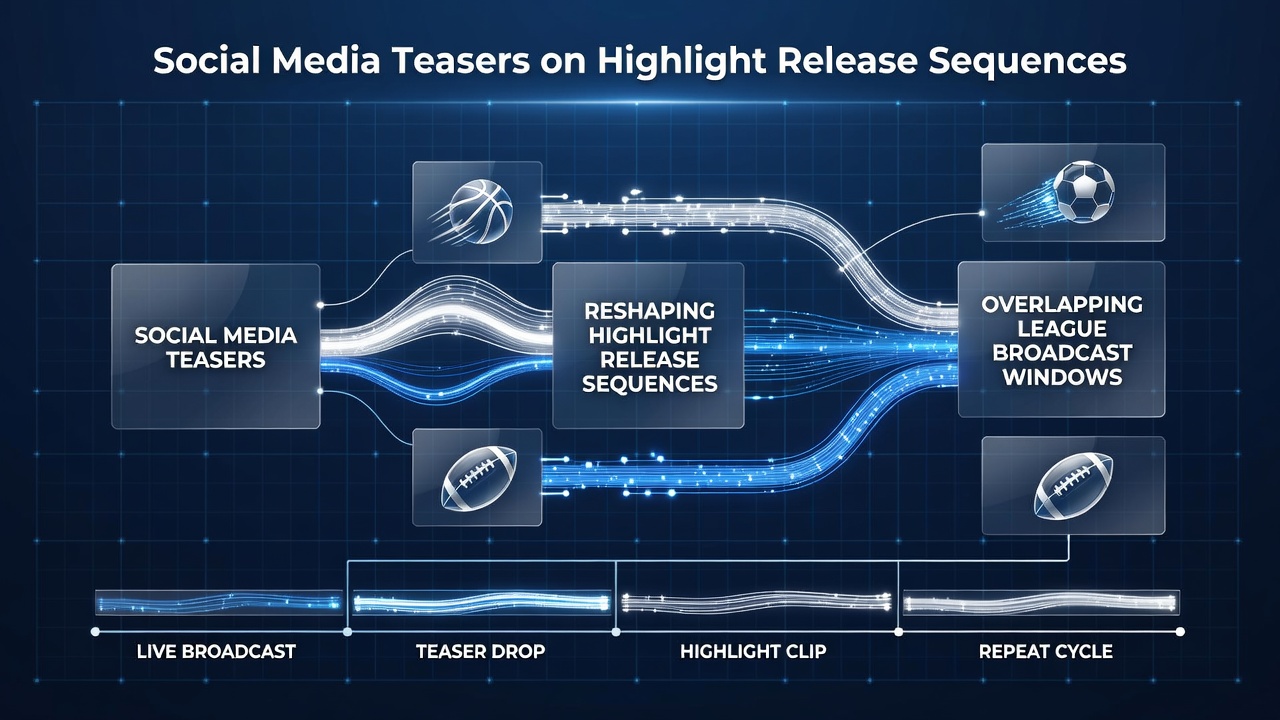
Social Media Teasers Reshaping Highlight Release Sequences Across Overlapping League Broadcast Windows
League schedules in October 2026 create dense broadcast windows where soccer matches, basketball games, and football fixtures often run simultaneously across time zones, forcing media teams to adjust how they distribute highlights and clips, while social media platforms push teaser content that primes audiences for staggered releases later in the day or the following morning.
Teaser Content and Timing Adjustments
Platforms release short clips lasting fifteen to thirty seconds that showcase key moments or player reactions without revealing full outcomes, and these posts appear on accounts managed by leagues or broadcasters minutes after games conclude, yet the complete highlight packages follow hours later once overlapping windows clear and rights agreements allow wider distribution. Researchers at the University of Melbourne documented similar patterns in a 2025 study on digital sports media, noting that teaser frequency rises when three or more major events share a four-hour block, prompting teams to sequence full recaps around viewer attention spans that fragment across devices.
Overlapping Windows Drive Sequence Changes
Broadcast calendars show European soccer leagues starting in the afternoon while North American basketball doubleheaders tip off in the evening, creating gaps where partial highlights circulate on social channels before full replays land on official streaming services, and this approach reduces simultaneous demand on servers during peak traffic periods. Data from the Canadian Radio-television and Telecommunications Commission indicates that digital traffic spikes drop by roughly eighteen percent when teasers precede longer packages by at least ninety minutes, allowing networks to manage bandwidth without throttling other live streams. Observers note that production crews now coordinate teaser scripts in advance, writing captions that hint at dramatic plays while withholding scores, which keeps engagement metrics steady even as full sequences shift later into the night.
Platform Algorithms and Release Coordination
Recommendation systems on major networks prioritize teaser posts during the first hour after a game ends, pushing them into feeds of users who follow multiple leagues, and this timing influences when longer highlight videos surface because algorithms detect sustained interest from initial clips before surfacing extended versions. Production teams adjust release sequences accordingly, holding back certain angles or commentary tracks until teaser performance data arrives, which in turn shapes the order of clips in the eventual package. Those who've tracked these patterns across continents point to increased collaboration between social media managers and broadcast rights holders, ensuring that teaser visuals align with blackout rules or regional availability without violating existing contracts.
European Commission reports on digital content distribution highlight how such coordination helps rights holders maintain control over primary broadcast windows, while still feeding audience appetite through secondary channels, and this balance has become more pronounced as October 2026 schedules pack additional international qualifiers alongside regular season play.
Viewer Pathways and Content Discovery
Audiences encounter teasers first through notifications or feed scrolls, then navigate to dedicated highlight hubs once the overlapping windows pass, creating a two-stage discovery process that leagues now build into their marketing calendars, and this method reduces direct competition between simultaneous live events and their post-game recaps. Industry groups such as the European Broadcasting Union track how these staggered sequences affect overall viewership retention, with figures showing that users who engage with teasers return for full packages at higher rates than those who receive only direct links to longer content. Teams managing multiple sports often test different teaser lengths and formats during heavy overlap periods, measuring completion rates before finalizing the order of highlights in the main release.
Technical and Rights Considerations
Encoding teams prepare multiple versions of each highlight package in advance, with teaser-ready cuts optimized for vertical viewing on mobile while full sequences include wider aspect ratios suited for desktop or connected television playback, and rights management software now flags which segments can appear in teasers without triggering exclusivity clauses. Overlapping windows amplify the need for these layered preparations because a single game might share airtime with events from different continents, requiring precise timing on when partial versus complete content becomes available across regions. Studies from academic centers focusing on media economics show that this layered release model spreads server load more evenly, particularly when international audiences access content across varying peak hours.
Conclusion
Social media teasers continue to influence the order and pacing of highlight releases whenever league calendars create dense broadcast overlaps, with data from regulatory bodies and research institutions confirming measurable shifts in traffic patterns and viewer return rates through October 2026 and beyond. Production workflows adapt by preparing staged content packages that respect rights agreements while meeting audience expectations shaped by initial teaser exposure.